Showing posts with label gender roles. Show all posts

Wednesday, February 25, 2015

Helen: Prude or Slut?

While reading All's Well That Ends Well, I was struck with just how familiar Paroles's arguments about virginity sounded. And, in fact, despite his less-than-upright character, I have to admit that I liked (parts) of what he was saying, if only for the humor he presents.

Let's start with Helen's question: "Man is enemy to virginity: how may we barricade it against him?" (107-108). Instead of a consensual act between two parties, sex here is clearly depicted as an assault upon a woman's honor by a lustful man. Problem number one. Virginity is put upon a pedestal; a woman who has her virginity intact is pure, clean, and desirable, and as soon as she loses it, she is ruined. We've all heard it before.


With that in mind, I found Paroles's answer to be particularly hilarious. He says "there was never a virgin got till virginity was first lost" (121-122), and that "To speak on the part of virginity is to accuse your mothers, which is most infallible disobedience" (128-129).

Paroles makes me laugh here, because what he says is so true. Virginity in Shakespeare's day was idolized; a woman's entire worth depended upon her chastity (remember Lavinia?). Today, while a woman isn't completely valued based on the status of her virginity, it is still of the utmost importance. I like what Paroles says because his tongue-in-cheek comments ring true. The concept of virginity as a means to value and devalue women is ridiculous. On the most visible level, if all women strove to preserve their virginity, humanity would cease to exist. Sex, as Paroles points out, is not only natural; it's common. Every mother was once a virgin, yet we don't denounce our own parents as whores.

Though I don't agree with Paroles's main point, that women should have sex solely to procreate, I do appreciate a Shakespearean voice denouncing the value of the protected virginal status. Somewhere hidden in his snarky humor and off-the-cuff remarks lies a real argument against the practicality of coveting a woman's virginity, and that is something I can agree with.

Tuesday, February 24, 2015

A Tragic UFO (Unidentified Formidable Offspring)


The battle scene in Shakespeare’s The Tragedy of Coriolanus where Coriolanus fights through the city of Corioles and emerges bloody and wounded reminds me of the film Alien vs. Predator (2004) in relation to his "second birth." In the film, a group of archaeologists investigate a mysterious heat signature coming from under an abandoned whaling post. The explorers discover a large undersea pyramid containing large amounts of warmth, symbolizing the womb with dynamics similar to Shakespeare’s work. For example, once in the pyramid, the explorers attempt to penetrate deeper into the structure but encounter a confusing series of tunnels that open and close without warning. This is similar to the gates of Corioles in that the citizens open the gates only to trap Coriolanus as he invades the city. When Lartius urges Coriolanus to give up the fight, Coriolanus replies, “My work hath yet not warmed me” (1.5.18). He desires to fight through the searing battle to win victory and honor much like the movie’s characters search relentlessly for the source of warmth itself. At the conclusion of the battle, the city of Corioles as a womb “gives birth” to a victorious Coriolanus through its gates much like the fiery expulsion of the archaeologists out of the pyramid through a long, narrow passageway (birth canal).
            Another similarity between the works deals with situational gender roles. In Shakespeare’s play, Coriolanus finds himself conflicted between the interests of Volumnia and Aufidius, trusting them both and experiencing betrayal. Similarly, the explorers discover that the goal of their mission conflicts with the goals of the aliens and predators. In the end, the massive, masculinized queen of the aliens (Volumnia) confronts the central predator warrior (Aufidius). In any case, though, whether Volumnia actualizes her goals as an influential mother or Aufidius realizes his ends, Coriolanus loses. Ironically, the motto of the movie reads, “Whoever wins, we lose,” referring to the similarly precarious circumstances of the explorers and humanity in general as it is represented in the small yet diverse group. In my opinion, the movie emphasizes the influential power of Volumnia by showing the awe-inspiring power of her breaking free of her longstanding chains (her limited role in society as a woman) to finally have a chance to make meaningful change in a male-dominated society. Yet the closing camera shot shows the queen sinking beyond sight into the black abyss of the Antarctic Ocean, demonstrating that Volumnia will ultimately sink under the influence of the preferred gender roles of patriarchal Rome where men expect women to stay out of the public eye. Though the Roman citizens declare Volumnia to be a hero because of her role in Coriolanus’s return, she ultimately returns home defeated in a sense, for she is unable to alter Coriolanus’s final fate. What does everyone else think?

Wednesday, February 11, 2015

"Gorgeous hair is the best revenge."

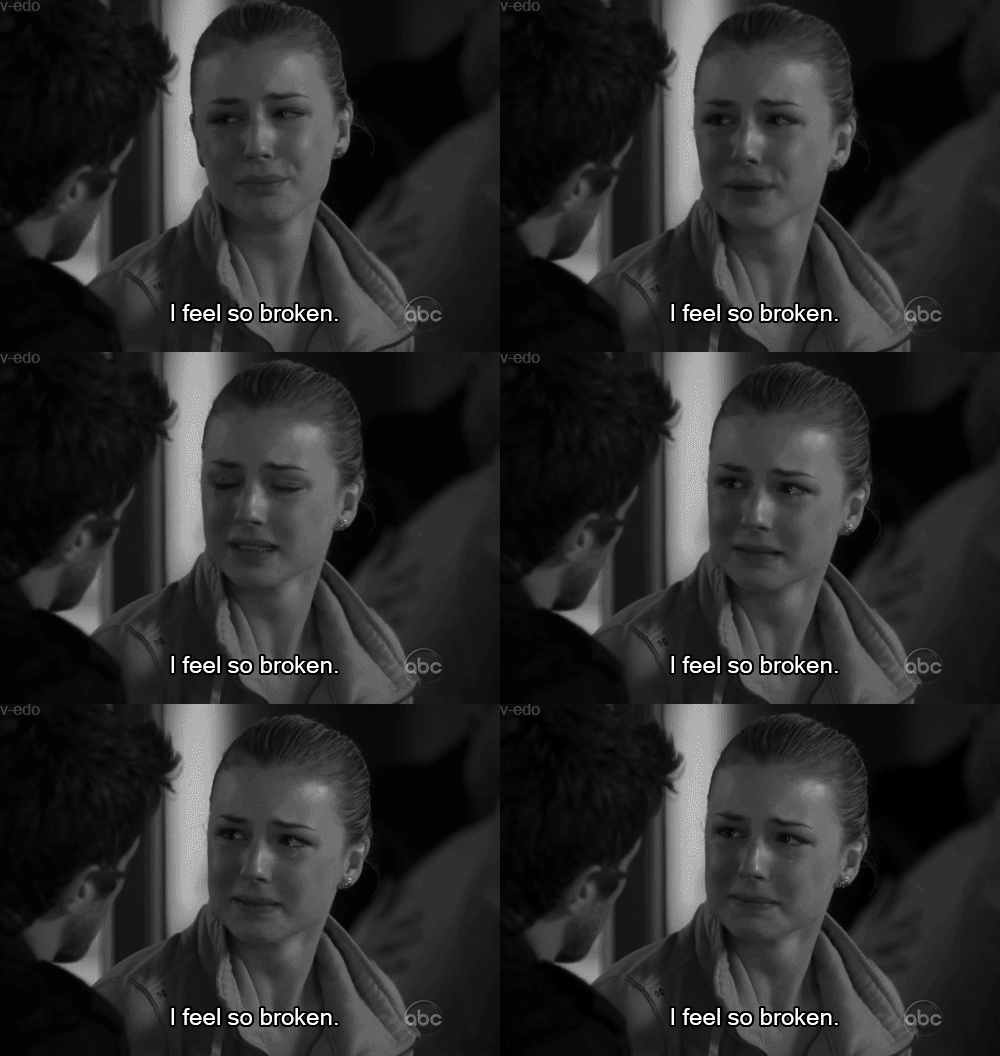
While reading Titus Andronicus, I couldn't help but think of the television show Revenge. Both the play and the television series are essentially centered around a woman's thirst for vengeance, despite being presented as the typical tale of the epic hero's fall.


In Titus Andronicus, the play really gets going after Tamora's son is killed. Pretty much everything that happens - Lavinia's rape, Bassianus's murder, etc. - is a result of Tamora's desire for revenge. Similarly in Revenge, Emily Thorne (the character around whom the show is centered) is somewhat of a Tamora figure who is determined to avenge the supposed framing and murder of her father. It is very interesting to see how both Emily and Tamora are either presented or perceived (by people in their respective fictional realms, and outside those realms) as psychotic, villainous characters.

However, what I appreciate about Revenge is that instead of forcing Emily to fit into a Madonna/whore binary, the show allows her character to have depth and complexity - just like a real woman does. Emily can be conniving and ruthless, but no matter what kind of twisted things she does, she still has her humanity. Instead of painting Emily as a woman who is evil to the core, the show places the emphasis on her actions - and not all of her actions are bad. Emily is frequently depicted showing remorse for those that she injuries on her quest for revenge, including people who have betrayed her.


On the other hand, Shakespeare, in Titus Andronicus, doesn't afford Tamora much humanity. By contrasting Tamora with the angelic Lavinia, Shakespeare presents Tamora as the "whore". Not once does she seem like an actual human being - she's just a fair-skinned devil.
Perhaps if Tamora's character was given more humanity (such as in Julie Taymor's film interpretation of the play), I would've enjoyed the play more.

This all led me to think about the reason that we still have so many strict gender binaries even though we are centuries past Shakespeare's time. If women are constantly being presented in literature and pop culture as either vindictive wenches or virginal paragons of virtue, then that's what people will expect women to be. Revenge (even with their many flaws) are a step in the right direction.
 It is a bit sad that we aren't at a place where we can see ridiculous representations of women and critique them or understand the irony behind those representations, but shows like

Until our society is at a point where it is the norm for female characters to be portrayed with the same complexity as male characters, I'll take solace in the fact that it's the genius female characters like Emily and Tamora who are responsible for some epic revenge.


Venus: IFBB Pro & Badass


        While reading Shakespeare’s Venus and Adonis and discussing in class some of the possible “masculine” traits she has, I was constantly reminded of an old friend who keeps appearing on my Facebook newsfeed. This friend is a female body builder and has won competitions all over the country. She is an IFBB (International Federation of Body Builders), she’s jacked and has worked extremely hard to be where she is today. But, some people in society still feel as though women body builders are “too masculine” and maybe even “ew she luks so nastie.” (I found these comments on a site that had photos of body builders as I was researching, the misspellings show you just who is commenting on these photos! Ha.) Are female body builders taking on a male role like Venus did in this poem?


As we know from Shakespeare’s version of the tale, Venus seems to take over some of the traits society may see as masculine. Richard Ramuss says in his article, “What it feels like for a boy: Shakespeare’s Venus and Adonis,” “Shakespeare’s Venus appears to dwarf Adonis, whom she freely manhandles throughout the poem” (242). It seems as though many critics have questioned if the roles in this version of the poem are reversed. This is also a question many people ask of female body builders. Are they too manly? Is Venus the man in this poem?


Here’s a little bit of fun history behind female body building (which I found at bodybuildingpro.com) --à
·         Origins began in European vaudeville acts and circus strong women acts. (Really?... In the circus? This is probably a factor is society not taking female body builders seriously…. Just sayin’)
·         During the 1950’s through the 70’s, some men’s competitions held women’s beauty or bikini conests.
·         The first official female completion was held in Canton Ohio after the Feminist Movement in November 1977.
·         Gina LaSpina (No idea if that’s a real name but if it is, it’s awesome) was the first champion.
·         Now, hundreds of thousands of women compete all across the world!

As Shakespeare’s tale continues, we see Venus “pluck him [Adonis] from his horse,” and gather him under her arm. He even says to her, “You hurt my hand with wringing.” Does this make Venus a man and Adonis a woman?


Definitely not.


It makes Venus a bad ass because she knows what she wants and it’s Adonis. It also helps that she’s larger than him because she can just pick him up and carry him away, no matter how creepy that may be. (That’s not my point in this blog though…) Just because society feels a certain way about masculine and feminine traits, doesn't mean it has to stay that way. The evolution of female body building is proving that. While it is not for me, I will continue to like away at the Facebook photos of my friend and her bronzed, sparkly bikini, and killer abs because she’s doing what she wants, just like Venus was trying to do. 


Lady MacBeth, Meet Grindr.

Whenever I (hesitantly) re-download the gay hook-up app Grindr, I am immediately and constantly plagued with the same question- over, and over, and over again.
“Are you masc, or fem?” 
This question may look easy to answer. But that’s where you’re wrong. It nags and gnaws at me with a ferocious appetite, one that I can never quite satisfy with the correct answer. 
Recently, I’ve discovered that I’m not the only one with this problem. Thousands of other users on Grindr complain that they, too, are harassed and pigeonholed daily by men who feel the overwhelming need to put a label on everything.
My personal problem with this is that I don’t identify as either masculine or feminine. There are things I do that are masculine, and there are some that are feminine. I don’t see a need to be put in a place where I don’t belong. In a perfect world, I would be able to embody both of these gender and sexuality roles seamlessly, but we do not live in a perfect world. This blend of masculinity and femininity has only been pulled off, successfully,  a few times in literature. One of those times was with William Shakespeare’s character Lady MacBeth in MacBeth.
In the play, Lady MacBeth is struggling to get one thing- the crown. She wants to be queen and see her husband become the king of Scotland so bad, that she’ll do anything in her power to do it. Sadly, she doesn’t have much power, because she is a woman. She is supposed to follow the unofficial female rules of that time period; keep your mouth shut and keep your husband happy while he fights for honor and works for glory. Most women abided by these rules at the time.
However, Lady MacBeth is not like most women. When she sees an opportunity to become the next queen, she takes matters into her own hands by throwing a party for the king and planning his assassination that night. She is not taken seriously by the men invited based on her gender, but little do they know of her masculine power hiding underneath. 

I identify a lot with Lady MacBeth’s struggle to break out of her assigned gender stigma. While she is trying to prove her masculine power trapped in her feminine confines, I am trying to prove to men that I am a balance of both. I find it funny that something so old can still be so relatable to men and women today. 

Liminal Lovers

            Richard Rambuss’ piece “What It Feels Like for a Boy: Shakespeare’s Venus and Adonis” explores the “liminal, beardless boy” that is Adonis. However, both Venus and Adonis in the poem both exhibit and experience certain liminal qualities, those that rest in a state of disorientation, ambiguity, or transition.  
            The poem begins with describing Adonis as “[r]ose-cheeked” (line 3) and Venus “like a bold-faced suitor [that] ’gins to woo him” (line 6). Not only does this indicate a sort of gender role reversal, but this also puts both Adonis and Venus in liminal positions regarding their identities, based on the narrator’s phrasing in the beginning of the poem. This disorients the two characters from their patriarchal-assigned gender roles, as it associates Adonis with an air of more physical beauty and Venus as a man attempting to gain Adonis’ favor. This is also evident when she references him as a “[s]tain to all nymphs, more lovely than a man” (line 9); then, later, the narrator of the poem compares Adonis’ blushing to that of a “maiden burning of…cheeks” (line 50). Venus seeks to disorient Adonis so he may question his identity, bringing him almost to a place of nonexistence, or a liminal space, in which he does not fit into being altogether masculine or feminine. She does this, however, by attempting to feminize him despite his identity as a cis male (or what is assumed from the poem). In this she hopes to bring him closer to her by making him liminal like her.
One depiction of Adonis being pursued by Venus.

            Venus is also liminal, seen as the masculine pursuer instead of the feminine figure being pursued. Not only is she referred to as having an “engine of her thoughts” (line 367), but Adonis’ hand caught in hers is like a “lily prisoned in a jail of snow” (line 362). These lines paint Venus as having male characteristics, of working like an engine and a snow bank that cannot be lifted. Despite depicting her more masculine, it feels more as though Venus is stuck in a liminal state of god and human rather than being hypermasculinized. As a god she is used to harnessing and applying the power she has to what- or whoever she wants, as “[h]er lips are conquerors, his lips obey” (line 549). Gods themselves, even the female, are masculine to the extent that they do whatever they please: “She wildly breaketh from their strict (restricting) embrace” (line 874). In this sense is Venus masculinized through her god status, and, more often than not, feels more commonly accepted. Furthermore, it feels as though Venus wishes to enter a transitioning state, as “[s]he’s love; she loves; and yet she is not loved” (line 610). As a goddess humans cannot fully satisfy her for eternity because she is immortal and her human lovers are not. Despite this, she pursues love, but Adonis “hate[s] not love, but [Venus’] device (tactics) in love” (line 789). Venus, being a goddess, would not be versed in the human tactics of love, which would include the girl shunted into the patriarchal system, never to speak and always to consent, the exact opposite of the pursuing and forceful Venus.

            “Venus and Adonis” addresses some complex situations of liminality in regards to what it means to be male or female and what it means to be human and love. Is Adonis truly androgynous, or is that how he is painted out to be? Even after Adonis’ death, would Venus ever be able to achieve human love, or is she forever stuck in a liminal space?