Showing posts with label Gender. Show all posts

Friday, May 15, 2015

A Feminist Bard?

It's nearly impossible to take any figure, public or private, and declare them unproblematically feminist. For one, people are multifaceted and contradictory within themselves, and hardly ever conform to one ethical ideal. On top of that, the accepted definition of 'feminist' has morphed enough since its creation that it can be difficult to pin down exactly what the qualifications are, never mind whether all self-declared feminists will agree on whatever you decide.

Of course, people try to declare each other feminists anyway. Sometimes most people agree on a verdict; Laverne Cox is a feminist, Bill O'Reilly is not. More often, particularly with historical figures who are too dead to directly ask, there is some contention. Shakespeare is a fine example of the latter, and it's doubtful that critics will ever totally agree.


Feminism as we know it today was not even a twinkle in the eye of Elizabethan writers. Our understanding of gender has progressed astronomically in the four hundred years separating Shakespeare and bell hooks. Asking what Shakespeare thought of the construction and deconstruction of heteronormative gender binaries is a moot point; the thought as we think it would never have occurred to him. There was no word for heteronormativity in Elizabethan England, it just was.

Calling Shakespeare a feminist is a bit like calling Socrates a communist; it's more than a little anachronistic. Still, taken in the context of his time, Shakespeare can certainly be read as an advocate for gender equality and transgression – a sort of proto-feminist, an early example for later creators to follow. His separation from the words and theories we have today doesn't preclude a relatively radical view of gender and sexuality reflected in his work.

Analysis of ideals in Shakespeare's work that could translate to an analogue of feminism requires presumption of authorial intent, which is, particularly on its own, a questionable method of critique. However, with historical context taken into account, it's possible to make guesses at the way a typical audience of the time would have perceived his work – and, therefore, to make even more abstract guesses at the sort of reactions he might have attempted to provoke with particular plots or lines. And though nearly every play he wrote ended in a reversion to heteronormative standards, the meandering queerness of the meat of his plays suggests at least a passing interest in transgressing gendered expectations.

Would Shakespeare have ascribed to generalized 'feminist' ideals were he alive today? It's impossible to know, but his work says maybe.

Anatomy as Authenticity

In a perfect world, any modern adaptation of a Shakespeare play would take the latent queerness in the work and run with it. Many productions have done this, particularly for the stage, and many haven't. She's the Man has ample opportunity to be one of the former, and it passes up every one in favor of adhering to rigid constructions of gender and sexuality, sacrificing progressiveness for a reliance on jokes rooted in harmful binaries.

The list of mismanaged moments in the film is not short, but perhaps the crowning piece of heteronormativity comes during the climax of the film – the use of characters' anatomy as definitive proof of their gender identities.


In the nineties, this kind of conflation of physical sex and gender might have gotten a pass for being an artifact of its time. But She's the Man came out in 2006, and by then even Gender Trouble had been around long enough to start seeming problematic in light of the growing collective understanding of theory in queer communities. In any case, people involved with She's the Man knew about passing on a budget, packing with socks and binding with ace bandages; presumably, in their research on FTM presentation, they would have come across the idea that anatomy does not, in fact, dictate gender identity.

After all, these strategies for passing exist as a means of circumventing physical and social gender dysphoria – intense discomfort or trauma inspired by a person's anatomy not 'matching' with their experienced gender identity. The source of dysphoria varies; it can come from a personal feeling of wrongness in one's own body, or from social interactions hinging on assumptions of gender made by others. It's often an indicator of a trans identity for the people who experience it.

In a more radical world, 'Sebastian' having breasts would imply nothing about his gender identity one way or the other. The film certainly had any number of chances to be transgressive in that vein, and to bring little scraps of queer theory into the mainstream. Instead, the script manages to make even a film about a female-identified person learning to feel confident presenting male a travesty of binaries and outdated assumptions about gendered bodies.

Tuesday, April 14, 2015

12th Night or The Epiphany

Until I did some research on The Twelfth Night, I was unaware that the Shakespeare drew his title from an actual holiday. The Twelfth Night is typically celebrated on January 5th (12 days after Christmas). I did not put two and two together that the “twelve days of Christmas” song had any relation. This Holiday is also known as Epiphany. Epiphany celebrates the arrival of the Magi, or The Three Wise Men to deliver gifts to the baby Jesus. One might expect the Epiphany celebration to be similar to the rest of Christmas Celebrations, but it is said that these celebrations have been known to be pretty wild. When you think of an Epiphany party, think modern day Mardi Gras.
Surely Shakespeare must have known about this holiday and wrote his play based on it? Right?
And if Shakespeare knew about this, was his play supposed to be performed on this night? Probably.
*Evidence can be said that the play was performed on January 6, 1602 for Queen Elizabeth and her guest Count Don Virginio Orsino. However, this fact is debatable.
The Epiphany celebrations are known to be "a time of masques, revels, defiance of authority, and general foolishness" which Shakespeare’s play clearly suggests. The Epiphany parties are celebrated as a festival In which everything is turned upside down or topsy-turvy. Traditional roles and behavior are temporarily suspended. Thus making Twelfth Night and especially the plays subtitle, Or What you Will, the perfect title for a play written for an Epiphany party.
Are things similarly turned upside down in Illyria? Yes.


Secular and bawdy themes are portrayed through Maria, Sir Toby, and Andrew’s antics. Their treatment of Malvolio can be seen as bawdy, or obscene. Maria’s letter tricking Malvolio to believe that Olivia is in love with him also fit into the amusement and general foolishness. This also portrays an act of defiance because the servants are tricking Malvolio, their social superior into making everyone believe that he is a mad man who deserves to be locked away.
Another aspect of an Epiphany party is masquerading which is captured in Viola’s plan to disguise herself as a boy. Not only does this disguise fit into masquerading, it also runs contrary to the social norms and captures the theme of defiance of authority. The prevalence of disguise and the ambiguity of gender roles play a huge role within this play. Violet’s gender reversal leads to a confusing love triangle in which she ends up loving a man and being loved by a woman who does not realize that she is in fact a woman.

Romance and lust is portrayed through the multiple love triangles. 


Finally, all of these events take place within a setting in which anarchy and madness are everywhere.


Monday, March 30, 2015

 "Boys in the Head:" Gender Policing in Shakespeare's As You Like It 

       Shakespeare's As You Like It features a female character pushing the limits of  conventional gender and sexuality; Rosalind achieves her goals, but at what cost? Popular in plays like Merchant of Venice, All's Well That Ends Well, and Titus Andronicus is the success of its female roles, but at the expense of others. Certain aspects of Shakespeare's writing does lend itself undeniably to enlightened and progressive ideals of gender and sexuality, but I can't help but wonder... it is it doing more harm than good?

          In As You Like It; Rosalind dresses as a man and flees to the forest. Rosalind calls herself Ganymede, an androgynous sex symbol that quickly enchants Orlando and Phoebe. In Rosalind/Ganymede we are presented with one of the most kick-ass examples of fluid sexuality and fluid gender, but at the expense of the female sex. Yes, one could argue that the rail against the character of Phoebe by Rosalind  is used to show the constraints placed on them, but I find her rant somewhat offensive to the female gender. This is not to say that Rosalind isn't a hero, which she is, but the policing of her own gender detracts from her appeal. The conversation between Celia and Rosalind after Ganymede/Rosalind's lesson with Orlando is particularly interesting because Celia points out that Rosalind, "'...simply misused our sex in your love prate. / We must have your doublet and hose plucked over your head, and /  show the world what the bird hath done to her own nest'" (As You Like It 4.1.Ln.172-4). What Celia is saying is that in order to gain ground with Orlando she had to betray her own gender.
        
                     In order to put this in a modern day perspective; I have chosen magazine covers to illustrate my meaning in regards to Rosalind in As You Like It. What these covers have in common besides all the women featured on the front are beautiful, and uphold current beauty standards, but the headlines and content around them is most startling. "50 Ways to Seduce a Man," "Sex Survey, Thousands of Guys Reveal What Really Flips Their Switches," "What Guys Really Think About You!" The list goes on and on, we as consumers see these in our everyday life, but what are the repercussions of this kind of advertising? By focusing on what men want from women instead of what they want out of themselves is counterproductive. This has been called "Boys in the Head," and it can be seen in instances where women enforce the gender binary on themselves without there needing to be a man physically present. We as girls have experienced this throughout school and our adult lives. "Slut shaming" is a popular form of gender policing , as well as female relational aggression,  a direct result of women not being allowed to experience, nor exhibit aggressive behavior.  It is easy to make the connection between gender policing and Rosalind/ Ganymede's comments to Orlando, and it is no doubt problematic, but Shakespeare redeems the misogynistic undertones of the play by shedding light on gender policing through the role of Celia.

Wednesday, February 25, 2015

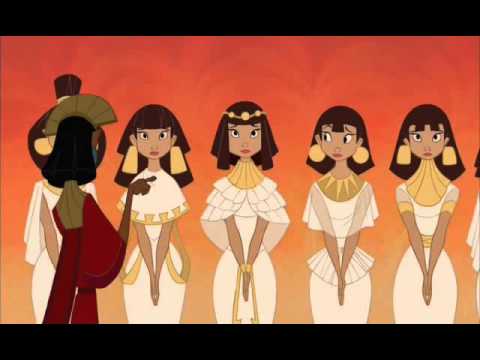
Helen's New Groove: Suitors in Shakespeare and Disney

            An interesting comparison can be found between the presenting of suitors to Helen in All’s Well That Ends Well (Act II, Scene III) and a similar presentation of potential spouses to the emperor Kuzco in the animated Disney film The Emperor’s New Groove. The drastically different origins/structures these two characters conform to (Kuzco being an upper-class/noble man, and Helen being a low-born/common woman) present a commentary on the treatment of gender/social class in regard to the suitor process. Not only this, but one can also find an interesting view into some of the changes/consistencies found in the depiction of finding a suitor in Shakespeare’s work as compared to a modern work.
First to consider is the role of each character’s social standing/class in regard to their approach of being presented with suitors. In this comparison, Kuzco appears on a surface level as a clearly more desirable spouse; as emperor of his kingdom, the wealth and social influence accompanied in becoming his wife are obvious. Alternatively, Helen appears/is viewed as a relatively undesirable bride, being of low birth and therefore lacking the dowry/familial connections/status a potential husband might be looking for. This can be seen as a potential reason for Kuzco’s suitor’s anger at his rejection (ignoring for the moment his disrespectful treatment of them), as well as Helen’s suitor’s (possible) relief at her dismissal of their advances in favor of Bertram. However, while Helen’s standing may not have been on par with nobility, she still had earned herself a close relationship with the king, and would’ve held a respectable degree of clout/significance through this relationship (evidenced by the king’s agreeing to allow her to pick her future husband). Not only this, but the king even states to Bertram his intention/willingness to more formally heighten Helen’s social standing, more or less alleviating the issue (although not to a satisfactory degree in Bertram’s opinion). Thus each character is presented as holding some degree of social significance (although the difference between their social standings is admittedly quite large), which pushes one to strive further outward in regard to the reasoning behind the suitors’ responses to their rejection.
Gender appears as potentially the most major difference existing between the reactions of the suitors to Helen as compared to Kuzco (possible relief/happiness and anger/sorrow respectively). With societal/cultural traditions usually stressing the male’s courtship of the woman, the interactions between Helen and her initial suitors can be viewed as potentially emasculating. In this situation, the classic gender roles have been reversed, and the group of young lords is presented to Helen in much the same way the maidens are presented to Kuzco. Thus Helen’s suitors would’ve viewed her rejection as less emasculating as compared to the removal of what they would’ve perceived as their right as men. This prebuilt gender norm also helps explain the modern interpretation of the suitor process as seen in Kuzco, the woman reacting more to him personally (and specifically his callous/rude behavior towards them) as compared to reacting to the situation itself (as is the case All’s Well that Ends Well, Helen herself being a wonderful individual often lauded by the other characters.

Keeping Up With Volumnia

For some odd reason, us, as humans, are either obsessed with out mothers, or we hate them. More specifically, mother’s in fiction/pop culture. Psycho, Medea, Mommy Dearest, Gypsy; the list goes on and on. In Shakespeare’s ‘Coriolanus’, Volumnia is the mother of the war hero, Caius Marcius. She is constantly pushing her son to be better, to do the things she only wishes she could do. Volumnia revels in her son’s victories and his scars. She’s the ultimate mom-ager. 
Sound familiar?
In our modern-day society, Kris Jenner would be Volumnia. Kris tried (and failed) to create a music career in the early eighties (cue the not-hit song ‘I Love My Friends’, which Jenner claims was just a ‘joke amongst friends’), and when she failed, she projected her dreams and desires onto her children. 
There are a lot of differences between Volumnia and Kris. For example, Volumnia was blocked from her dreams of power by her gender and the era she lived in, whereas Kris’s gender is not prohibiting her from acting out her desires. Volumnia’s relationship with her daughter-in-law is turbulent, whereas Kris is head-over-heels in love with Kanye. Kris is infamous for causing fights between Kim and other celebrities, most of them old friends, while Volumnia begs her son not to fight the city he once called home.

This is super interesting to me for many reasons. On one hand, it goes to show you that Shakespeare is the father of every plot device known to man, real or not real. (You can thank him for Lion King) Practically every movie deals with plot devices ‘fathered’ by Good Ol’ Willy. On another hand, it’s pretty freakin’ cool how people never change. Mother’s like Volumnia still exist to this day. We see it in Kris Jenner, we see it in Dance Moms, we see it everywhere!

Tuesday, February 24, 2015

Women in Shakespearean literature

Although Shakespeare reflects and at times supports the English Renaissance stereotypes of women and men and their various roles and responsibilities in society, he is also a writer who questions, challenges, and modifies those representations.
In his time, Shakespeare seems to be raising questions on what it means to be feminine or masculine.

Women are supposed to have the following virtues: obedience, silence, sexual chastity, piety, humility, constancy, and patience. Shakespeare however, rises above the stereotypical views of Renaissance society as he portrays women as more than passive vessels. For Example, in his play Alls well that Ends Well, the main character Helena is able to get what she wants through modes of deception. She is able to get Bertram to marry her, and then is further able to trick him into having sexual intercourse with her in order to keep him as her husband.


 Another example, is Venus from Venus and Adonis- here the male role of hypersexual is reversed, and within this poem, Venus is treated as the sexual aggressor while Adonis is treated as the effeminate boy, trying to escape Venus’ clutch.  Venus possesses agency in this poem, which is also a trait not typically given to women within this time period. She is able to influence and direct the outcome of events, unlike Adonis, who is left in her clutch. Not only are the roles reversed within this poem, Venus’ body is literally transformed into a superhuman body that is much larger than Adonis. She is able to pluck him from his horse and carry him over her shoulder, yet her weight can be supported by a flower? Contradictory? I think so.
Women within Shakespeare’s plays are given larger roles than many other stories allow for. Within both of these previously stated examples, the woman is able to overcome her male counterpart through their influences on other characters. These women are insistent in their right to direct their own destinies, and find ways to make sure that they can do so. 


Helena in Alls Well That Ends Well Is projected as an orphaned daughter, yet she possesses scientific knowledge that allows her to present the king with a cure for his ailment. By allowing Helena to be educated, Shakespeare is already placing Helena on a higher social scale than most women were placed on. Helena challenges these traditional attitudes about gender and sexuality that say that a woman should be chaste, obedient, and silent. Helena is a schemer, she is the female version of many of the kings in previous stories and plays. She uses her intelligence to get what she wants, and ultimately she is able to choose her husband instead of the other way around.
Both of the women in these play/poem are unique and are not afraid of a fight. These characters are unlike any of the other traditional characters, and they pave the road for more feminist characters that reject societal norms.

For further readings:
For women’s monologue’s within Shakespearian plays: